
November 10th 2026
Porous hydrogels from modified starch and cellulose: reactive extrusion processing and functional performance for safe and resilient agri-food systems.
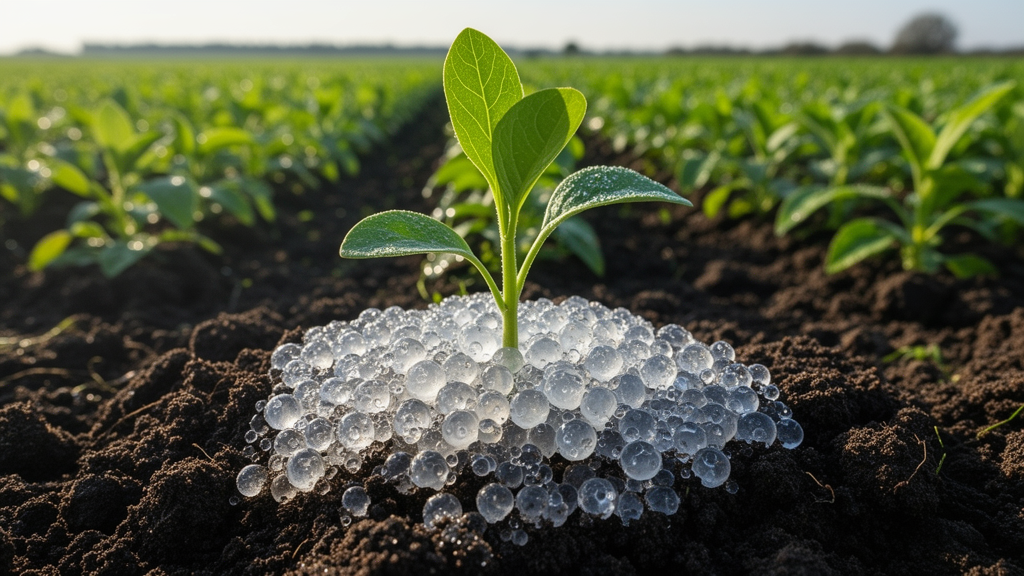
Agricultural researchers have developed biodegradable superabsorbent hydrogels capable of absorbing more than six times their dry weight in water, synthesized entirely through continuous reactive extrusion from agricultural biopolymers. In a study published in Food Safety and Risk, investigators fabricated porous polymeric networks utilizing cassava starch, cellulose extracted from oat hulls, gelatin, and glycerol plasticizer, evaluating their performance for soil conditioning and moisture management. The leading formulation, designated S.MS-MC-G and synthesized from citric-acid-modified cassava starch alongside sodium-trimetaphosphate-modified oat hull cellulose, achieved an equilibrium swelling degree of 607 percent, equivalent to 6.07 grams of water per gram of dry hydrogel, after forty-eight hours of immersion at neutral pH. The internal architecture of this material attained a total porosity of 45.34 percent, characterized by an interconnected open-pore proportion of 39.81 percent that accelerates liquid penetration while preserving matrix durability. These metrics demonstrate that continuous reactive extrusion can process renewable biopolymers into soil amendments, providing a sustainable alternative to conventional synthetic polyacrylamide networks that resist biodegradation.
The development of hydrogel matrices from renewable resources addresses serious agronomic challenges in modern farming, where climate change, recurring water scarcity, and soil degradation increasingly threaten crop yields and food security. While synthetic hydrogels based on polyacrylic acid provide high water absorption, their fossil-fuel origin and poor biodegradability pose severe ecological risks to agricultural soils. In response, the research team selected natural biopolymers recognized as Generally Recognized as Safe by the United States Food and Drug Administration, utilizing cassava starch containing 20 percent amylose and 80 percent amylopectin alongside oat hull cellulose purified by peracetic acid bleaching. Commercial gelatin with a gel strength between 150 and 220 grams served as an internal network stabilizer, while analytical glycerol acted as a plasticizer. The authors explicitly emphasized, however, that while these raw materials carry established safety classifications, the toxicological safety of the final extruded hydrogels was not evaluated in this study, meaning potential food-contact applications require rigorous migration testing before deployment.
To establish chemically stable polymeric networks without employing hazardous reagents or separate liquid solvents, the researchers executed an initial continuous reactive extrusion step to modify the raw starch and cellulose polysaccharides. Cassava starch was esterified using citric acid, a non-toxic tricarboxylic acid that forms intermolecular crosslinks between polysaccharide chains, achieving a degree of substitution of 0.365 by titration analysis. In parallel, bleached oat hull cellulose was phosphorylated using sodium trimetaphosphate, yielding a degree of substitution of 0.01 as quantified through colorimetric phosphorus determination at 600 nanometers. Both modification runs were conducted in a single-screw extruder featuring a 1.6-centimeter screw diameter, a length-to-diameter ratio of 40, four barrel zones maintained at 100 degrees Celsius, and a screw speed of 60 revolutions per minute. Extrudates were dried at 45 degrees Celsius, milled, sieved through an 80-mesh screen, washed three times with absolute ethanol to extract unreacted crosslinking agents, and finally air-dried at 45 degrees Celsius.
The final composite hydrogels were prepared by combining native and modified biopolymers across four distinct formulations to systematically examine the influence of crosslinking on matrix behavior. Pre-weighed dry components, comprising varying proportions of native starch, modified starch, native cellulose, and modified cellulose, were blended with gelatin and thirty-five percent glycerol for ten minutes using a stainless-steel spatula until a cohesive mass formed. The gelatin was incorporated dry, hydrating solely through intrinsic formulation moisture and glycerol. Processing took place in a laboratory single-screw extruder with a 25-millimeter screw diameter, a length of 26 screw diameters, and a die with six two-millimeter holes. The extruder barrel operated under a temperature profile of 90, 120, 130, and 115 degrees Celsius from feed to die, with a rotational speed of 35 revolutions per minute. Formulations were selected for their ability to run continuously without torque fluctuations or die clogging, after which strands were pelleted and dried at 60 degrees Celsius for three hours.
Internal structural characteristics were quantified through three-dimensional X-ray micro-computed tomography using a Bruker SkyScan 1172 system, exposing marked morphological contrasts among the extruded formulations. The control hydrogel S-C-G, produced from native starch, native cellulose, and gelatin, recorded a total porosity of 34.99 percent, containing the highest absolute number of individual pores that were small and evenly dispersed. In contrast, the fully modified S.MS-MC-G hydrogel exhibited a total porosity of 45.34 percent, accompanied by an open-pore proportion of 39.81 percent and larger, interconnected internal pathways despite having fewer total pores. The authors explained that during reactive extrusion, elevated processing temperatures drive rapid moisture vaporization from the molten matrix, nucleating pores whose stability depends on melt strength. The chemical crosslinking established by citric acid and sodium trimetaphosphate enhanced the elasticity of the molten polymer network, allowing it to withstand vapor expansion and preserve an open, interconnected internal pore architecture after exiting the die.
Spectroscopic investigation using Fourier-transform infrared spectroscopy confirmed that reactive extrusion successfully induced chemical bonding across the polymer components. Powdered hydrogel samples mixed with potassium bromide at a 1:100 ratio were analyzed on a Shimadzu FT-IR-8300 spectrometer between 4000 and 500 inverse centimeters with four inverse centimeters resolution. Spectra of citric-acid-modified starch and formulations containing modified starch displayed a distinctive ester carbonyl stretching band at 1730 inverse centimeters, confirming covalent ester crosslinking. All hydrogels showed a broad hydroxyl band at 3400 inverse centimeters representing hydrogen bonding, alongside methylene carbon-hydrogen stretching at 2900 inverse centimeters and characteristic cellulose peaks at 1017 and 895 inverse centimeters. Characteristic phosphate signals appeared at 1214, 1129, and 889 inverse centimeters across all formulations, although their intensities remained low due to low cellulose substitution and spectral overlap. Additionally, an absorption band at 1650 inverse centimeters evidenced hydrogen bonding between polysaccharide hydroxyl groups and gelatin amino groups, indicating a well-integrated composite network.
Thermogravimetric analysis performed on a Shimadzu TGA-50 up to 600 degrees Celsius at 20 degrees Celsius per minute under nitrogen demonstrated excellent thermal stability for all hydrogels. Derivative thermogravimetric curves revealed an initial mass loss between 50 and 120 degrees Celsius, attributed to the release of free and adsorbed water bound to hydrophilic functional groups. A secondary thermal event between 160 and 170 degrees Celsius reflected the volatilization of glycerol plasticizer together with the initial degradation of gelatin side chains. The dominant degradation stage occurred between 310 and 340 degrees Celsius, corresponding to the thermal cleavage of glycosidic bonds in starch and cellulose chains and the generation of volatile dehydration products. A final minor peak between 480 and 500 degrees Celsius represented gelatin carbonization. The onset of primary polysaccharide decomposition established that all extruded networks remain thermally stable up to approximately 300 degrees Celsius, confirming their capacity to withstand thermal fluctuations experienced during storage, industrial handling, and agricultural soil application.
Water vapor sorption behavior was analyzed across water activities from 0.11 to 0.90 at 25 degrees Celsius, following seven days of desiccation over calcium chloride and seven days of relative humidity equilibration. The experimental equilibrium moisture data were fitted to the Guggenheim-Anderson-de Boer sorption isotherm model, achieving determination coefficients of 0.99 for all formulations. The monolayer value m0, representing the maximum moisture adsorbed onto primary sorption sites, was highest in the native polymer sample S-C-G at 53.25 grams per 100 grams of solids. Conversely, modified starch hydrogels S.MS-C-G and S.MS-MC-G exhibited dramatically lower monolayer values of 5.86 and 6.51 grams per 100 grams, respectively. The researchers indicated that citric acid esterification consumed accessible hydroxyl groups on starch chains, thereby diminishing primary moisture-binding sites. Meanwhile, GAB energy parameters indicated that S.MS-C-G attained a C constant of 3.59, while multilayer parameter K ranged from 0.58 to 0.88 across samples, demonstrating controlled moisture affinity.
Swelling kinetics evaluated across pH 4.0, 7.0, and 9.0 over 48 hours demonstrated rapid water uptake and outstanding physical stability across all formulations. Immersed in cylindrical test devices fitted with mesh screens, hydrogel pellets swelled rapidly within the first 30 minutes, followed by a gradual increase until reaching equilibrium around 24 hours. Crucially, all hydrogels maintained their physical integrity for more than 48 hours of immersion, exhibiting volumetric expansion without dissolution or structural breakdown. At neutral pH 7.0, all formulations reached high equilibrium absorption values between 5.37 and 6.07 grams of water per gram of dry sample, corresponding to swelling degrees of 537 to 607 percent. Because materials absorbing more than 95 percent of their dry weight classify as superabsorbents, all four formulations met this standard. The highest swelling was recorded by formulation S.MS-MC-G at 6.07 grams per gram, directly reflecting its superior total porosity and high proportion of open pores.
The swelling behavior varied significantly with solution pH, providing valuable mechanistic insights into network stability under different chemical environments. At alkaline pH 9.0, equilibrium swelling decreased across all formulations rather than increasing through electrostatic carboxylate repulsion. The authors attributed this reduction to ester bond hydrolysis during 48-hour immersion, network rearrangement, and counterion screening that diminished the Donnan osmotic potential between the gel and solution. At pH 4.0, swelling variations were less pronounced due to reduced functional group ionization and the amphoteric character of gelatin near its isoelectric point. The ability of these materials to maintain high swelling under neutral conditions highlights their potential as biodegradable soil conditioners to conserve water and mitigate drought stress in crops. However, the authors emphasized that prospective applications in active food packaging or controlled agrochemical delivery will require comprehensive migration and toxicological evaluations to confirm real-world safety before practical deployment in agri-food systems.
DOI: 10.1186/s40550-026-00137-1
Source: https://bioengineer.org/biodegradable-starch-and-cellulose-hydrogels-enhance-water-retention-for-sustainable-farming/