
June 30th 2026
China slaps 73.5% anti-dumping deposit on Canadian pea starch to safeguard domestic industry.
China’s Ministry of Commerce (MOFCOM) announced on Tuesday that it will impose a 73.5 percent security deposit on imports of pea starch from Canada, starting Wednesday, after a preliminary determination by the investigating authority found the product was being dumped.
A Chinese expert said the preliminary determination is a routine trade remedy action conducted in accordance with relevant Chinese laws and regulations and World Trade Organization (WTO) rules, aimed at safeguarding domestic industry players and ensuring a fairer and healthier market environment.
On August 12, 2025, MOFCOM announced the decision to initiate an anti-dumping probe into imported pea starch originating from Canada. The investigating authority examined whether the product under investigation was being dumped, the margin of dumping, whether the domestic industry in China had suffered injury and the extent of such injury, as well as the causal relationship between dumping and injury.
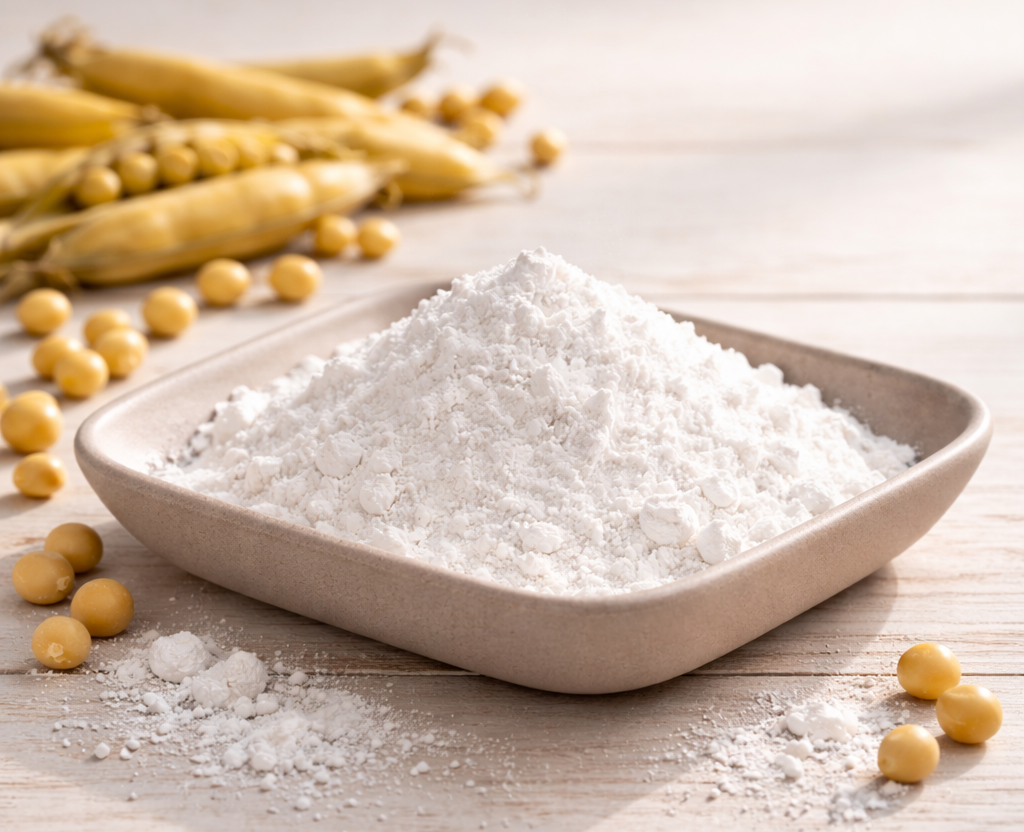
After a preliminary investigation, the authority determined that imports of pea starch originating from Canada were being dumped, that China’s domestic pea starch industry had suffered material injury, and that there was a causal link between the dumping and the injury, according to MOFCOM.
Pea starch is mainly used in the production of glass noodles and jelly noodles, and also serves as a thickener, stabilizer, emulsifier and binder. It is widely applied across multiple sectors, including food, pharmaceuticals, paper-making, textiles, coatings and feed industries, MOFCOM said.
“China’s preliminary determination is a routine trade remedy action conducted in accordance with relevant Chinese laws and regulations and WTO rules,” Zhou Mi, a senior researcher at the Chinese Academy of International Trade and Economic Cooperation, told the Global Times on Tuesday. Zhou noted that the investigation found that imports of pea starch from Canada were being dumped and had caused material injury to China’s domestic industry, providing a solid factual and legal basis for the imposition of provisional anti-dumping measures.
Moreover, the investigation was initiated in response to an application from the domestic industry and carried out in accordance with the law through an open, transparent and comprehensive process. Zhou said that its purpose is to safeguard the legitimate rights and reasonable development space of the domestic industry, maintain market stability and foster a fair, healthy and sustainable competitive environment, rather than restrict normal trade, the expert said.
According to the provisions of the Anti-Dumping Regulations, the investigating authority, on the basis of various comparable factors affecting prices, adjusts both the normal value and the export price to the ex-factory level for comparison in a fair and reasonable manner. In calculating the dumping margin, the authority compares the normal value with the weighted average export price to determine the margin of dumping.
In this case, six domestic enterprises submitted responses to the investigating authority’s questionnaire for domestic producers. Following verification, the authority found that the combined output of these six companies from 2021 to 2024 accounted for more than 90 percent of the total production of the like product, representing a major share of domestic output, and thus meeting the domestic industry determination requirements under the corresponding China’s Anti-Dumping Regulations.
The investigating authority preliminarily determined that these six responding companies are representative of the domestic industry, and that their data can be used as the basis for the analysis of injury and causation.
The starch industry is not only an important supplier of consumer goods, with products widely used in food and beverages, but also serves a broad range of industrial applications, Zhou said.
“If dumping exists, it could create significant unfair competition for related industries and enterprises by suppressing domestic market prices and squeezing the normal operating space of domestic producers,” Zhou said, noting that imposing provisional anti-dumping measures in accordance with the law helps restore a fair competitive environment and safeguard the stability of industrial and supply chains.
“Anti-dumping investigations are a commonly used trade remedy instrument under the framework of the WTO. China’s move constitutes a legitimate trade remedy rather than a trade restriction targeting any particular country,” Hu Qimu, a professor at the Maritime Silk Road Institute of Huaqiao University, told the Global Times on Tuesday.
Meanwhile, Hu noted that this is only a preliminary determination, not a final ruling. The investigating authority will make a final determination in accordance with the law based on further verification of the facts, the expert said.
Source: https://www.globaltimes.cn/page/202606/1364789.shtml